Books and Papers I Enjoyed
Incomplete list of books and papers I read and enjoyed.
Books
"AI"
Modern Applied Statistics with S (1)
The book was released shortly after the start of this millennium, so calling it "modern" might be a bit misleading — but it is still an excellent resource. The MASS R package is probably more widely known than the book itself, but the package is actually described as "Functions and datasets to support Venables and Ripley, 'Modern Applied Statistics with S'." The book not only provides clear explanations of statistical methods, but also covers many aspects of R. 1
This book was a great help to me when I first started working with R, as I had very limited experience with both R and statistical methods outside of machine learning. When I first read it, I did not know that things like contrasts even existed, or why one might encode ordinal data with orthogonal polynomials. I was familiar with Huber regression, but I had no idea about M-estimators, and many other concepts the book introduced to me.
Machine learning for high-risk applications: approaches to responsible AI (2)
Two of my former colleagues authored this book, so it was a natural choice for me to read. I consider myself fairly knowledgeable about machine learning, but this book broadened my understanding. It not only covered best practices for building ML pipelines in high-risk applications, but also gave me a solid introduction to US standards and regulations, along with an overview of the draft of the EU’s AI Act.
Deep Learning with JAX (3)
I’ve been exploring artificial neural networks since 2013. Back then, it was common to implement models entirely from scratch. If you wanted something more advanced than a multilayer perceptron, there weren’t really any flexible frameworks available — or at least none that I knew of.
Fast forward 10 years, and we now have several automatic differentiation frameworks that make prototyping new architectures much faster. My favorite so far is JAX.
What I like most about JAX is its functional programming approach, which encourages you to think in terms of functions. This makes code more composable — you can write a function that works on a single data point, and then scale it up automatically through vectorization.
Automatic differentiation in JAX also feels more intuitive than in other frameworks I’ve used. For example, if you want the gradient of a function f, you can simply call jax.grad(f) and you instantly get a function that computes the gradient of f. On top of that, JAX includes advanced capabilities like tensor sharding and relatively straightforward model parallelism. And if you’re familiar with NumPy, the syntax will feel right at home.
All of this (and more) is covered in detail in this book.
Practical Guide to Applied Conformal Prediction in Python: Learn and apply the best uncertainty frameworks to your industry applications (4)
Interpretable Machine Learning: A guide for making black box models explainable (5)
Interpreting Machine Learning Models with SHAP: A guide with Python examples and theory on Shapley values (6)
Food
Cooking for Geeks (7)
The Art of Fermentation (8)
The New Wildcrafted Cuisine (9–12)
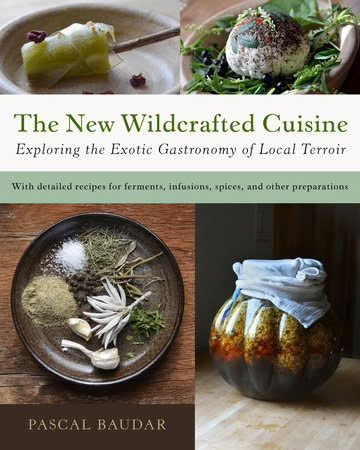
Baudar’s books are true works of art. He doesn’t just share mind-bending recipes—he’s invented an entire way of eating: invasivorism, the practice of eating invasive species. How amazing is that? The only catch is that Baudar lives in Los Angeles, so what’s invasive there might not be invasive elsewhere. Luckily for me, many of those species in the US are actually native to Europe, where I live. And it’s not just the ideas that shine—his books themselves are stunning. The photos, the design, the overall look and feel—they’re an absolute feast for the eyes.
So far, Baudar has written four books. Three of them focus entirely on fermentation — The Wildcrafting Brewer, Wildcrafted Fermentation, and Wildcrafted Vinegars. The fourth, The New Wildcrafted Cuisine, was the first in his “Wildcrafted” series and is packed with inspirational recipes featuring wild plants, insects, and even a touch of fermentation.
Bibliography
Footnotes:
More precisely, it focuses on R's predecessor — the S language.